Tennis · Pickleball · Basketball
Court repair that fixes the problem, not just the color
Cracks, low spots, peeling coatings, faded lines, posts and drainage — evaluated on site and repaired by our own crew across the Wilmington area.
What is wrong with your court?
Pick the problem that looks like yours. Each one explains how we repair it and what honestly needs a site visit to call.
Cracks
Hairline cracks spreading across the color coat, or wider structural cracks that reopen every spring.
Cracks
Hairline cracks spreading across the color coat, or wider structural cracks that reopen every spring.
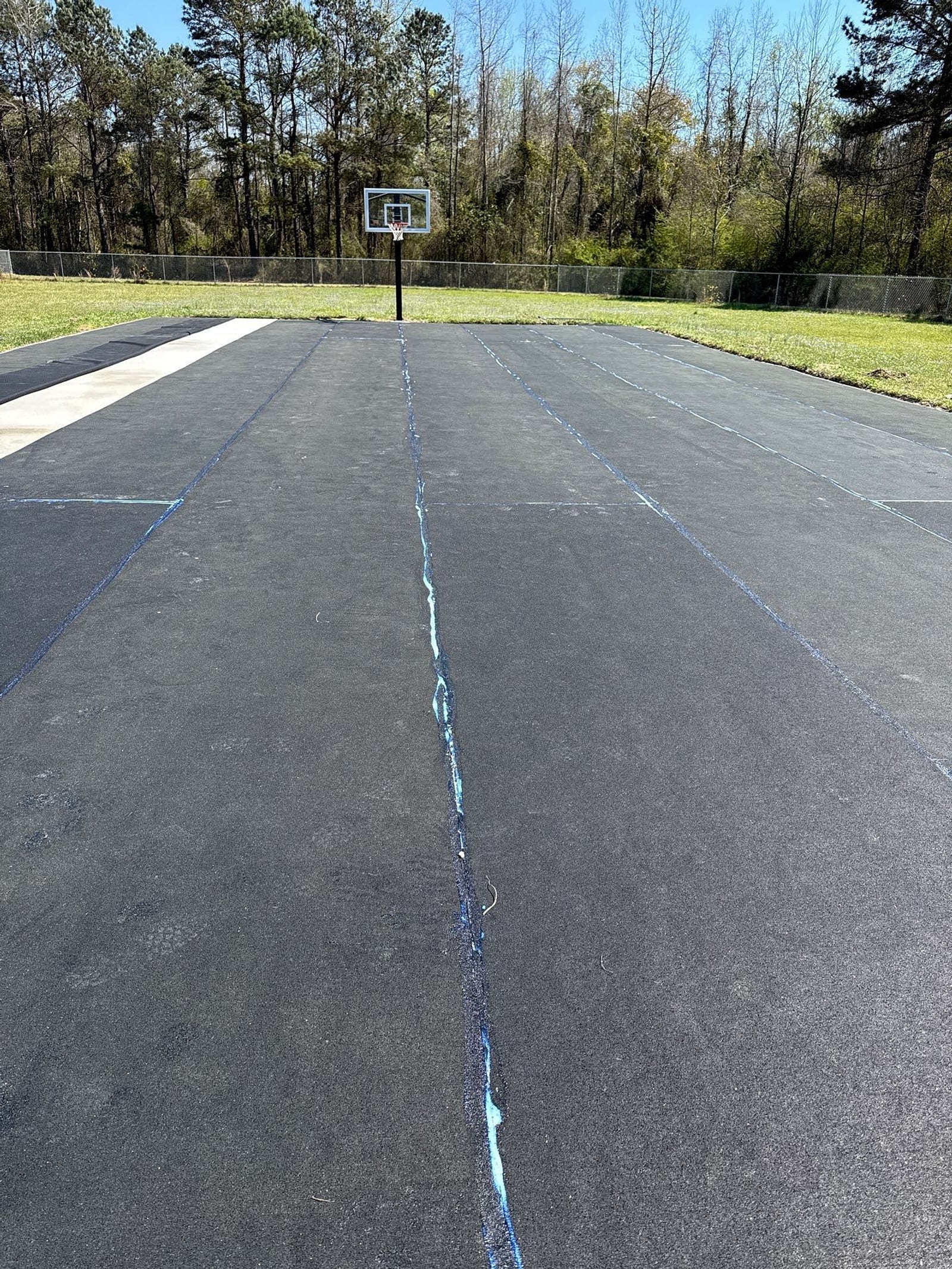
How we fix it: Surface cracks are routed or cleaned, filled with an acrylic crack filler, feathered and recoated. Wider or moving cracks get a reinforcing membrane or fabric system before resurfacing.
Worth knowing: No contractor can guarantee a crack will never return — cracks follow movement in the slab or base. We tell you which repair is realistic for your court and what the warranty covers.
Low spots & standing water ("birdbaths")
Puddles that are still there an hour after rain; slick patches and algae.
Low spots & standing water ("birdbaths")
Puddles that are still there an hour after rain; slick patches and algae.
How we fix it: We map the low areas after a wetting, then fill them with acrylic patch binder mixed with sand in thin lifts until water sheets off, before the resurfacer and color coats go on.
Worth knowing: Deep depressions or a slab that has settled need a site evaluation — patching has limits.
Peeling, blistering or delamination
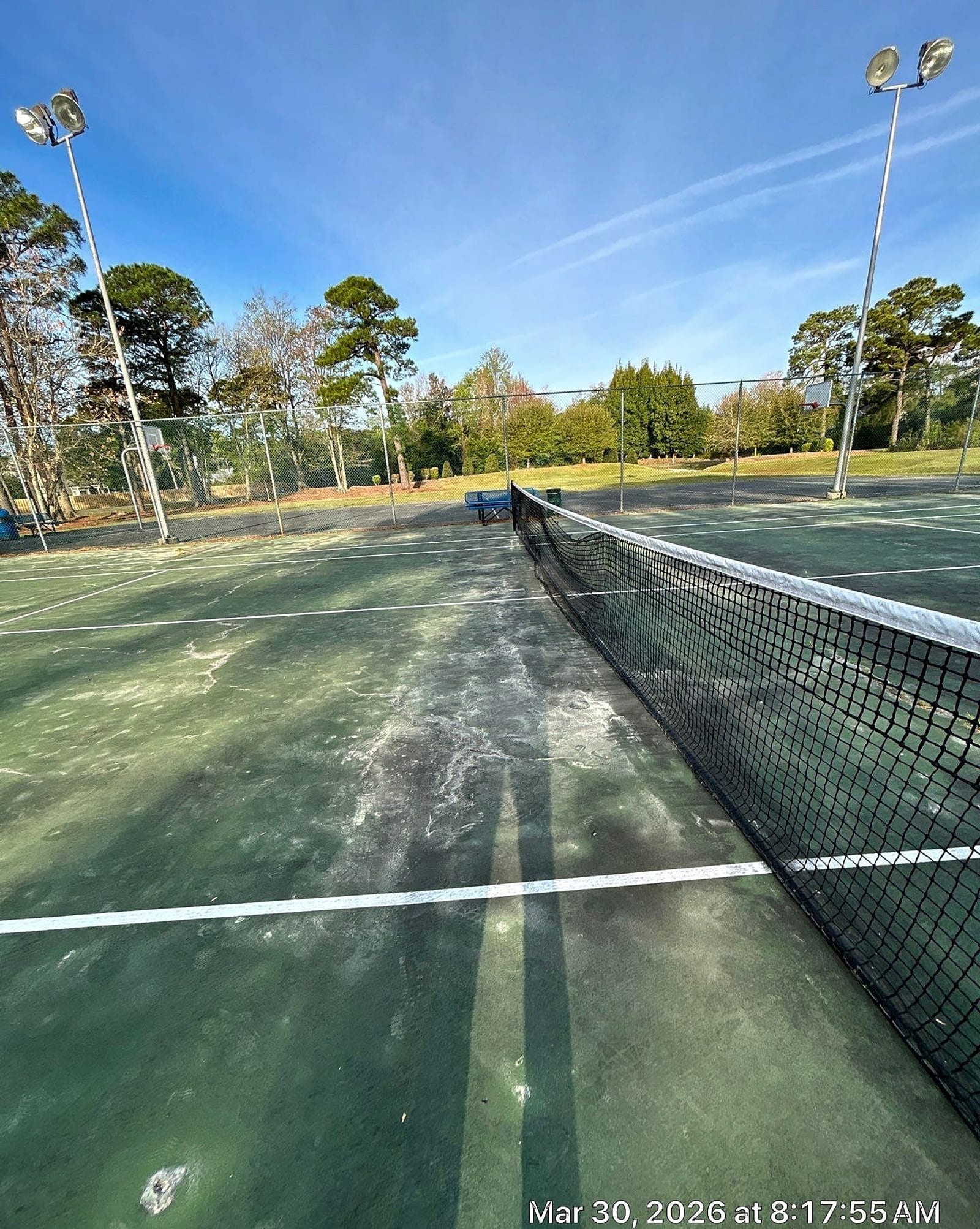
Color coat lifting in sheets or flakes; bare asphalt or concrete showing; chalky residue.
Peeling, blistering or delamination
Color coat lifting in sheets or flakes; bare asphalt or concrete showing; chalky residue.
How we fix it: Failed coatings are pressure-washed and scraped back to a sound edge, the surface is primed where needed, and the court is recoated with SportMaster acrylic resurfacer and color.
Worth knowing: Peeling is usually a moisture or past-prep problem. If it is widespread, a full resurfacing is the honest recommendation.
Faded color and worn texture
Pale, slick or sandy surface; inconsistent ball bounce; lines you can barely see.
Faded color and worn texture
Pale, slick or sandy surface; inconsistent ball bounce; lines you can barely see.
How we fix it: Two fresh color coats of textured acrylic restore grip and appearance; new lines are laid out and painted to USTA, USA Pickleball or NBA/NCAA dimensions.
Worth knowing: Coastal UV and salt air shorten coating life; most courts here want color coats every 5–8 years.
Lines, conversions & blended courts
Faded or peeling lines; a tennis court the neighborhood now uses for pickleball.
Lines, conversions & blended courts
Faded or peeling lines; a tennis court the neighborhood now uses for pickleball.
How we fix it: Line re-striping, tennis-to-pickleball conversions, and blended lines in contrasting colors so both games read clearly.
Worth knowing: Conversions are often done with a color recoat so the new lines bond to fresh paint.
Net posts, fencing, goals & drainage
Loose or leaning posts, rusted fence fabric, bent goals, water running onto the court from the edges.
Net posts, fencing, goals & drainage
Loose or leaning posts, rusted fence fabric, bent goals, water running onto the court from the edges.
How we fix it: Post sleeves reset or replaced, fence repairs, goal and backboard replacement, and edge or swale drainage corrections.
Worth knowing: We handle these in the same mobilization as surface repairs whenever we can.
Repair work from our own crew
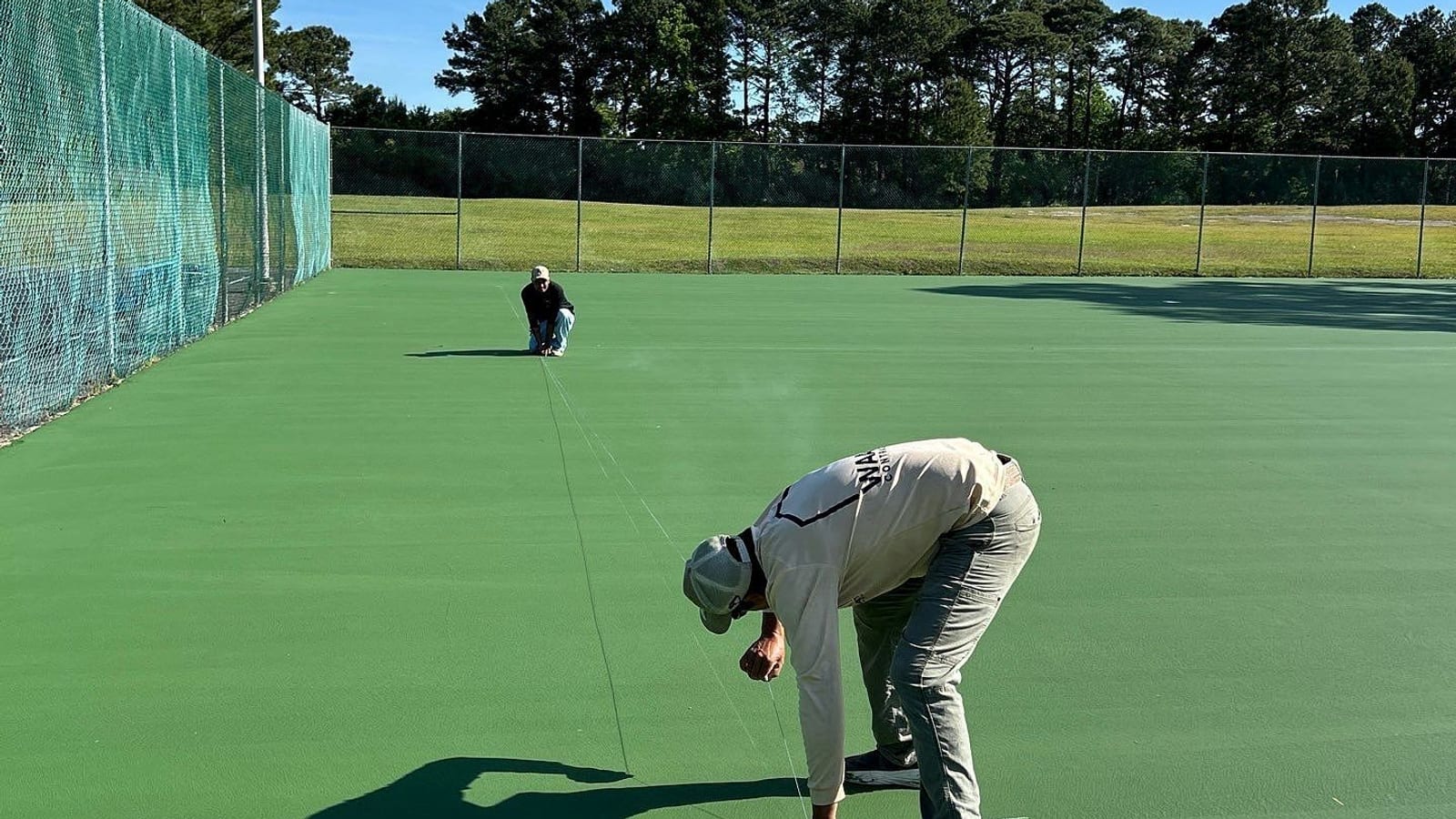
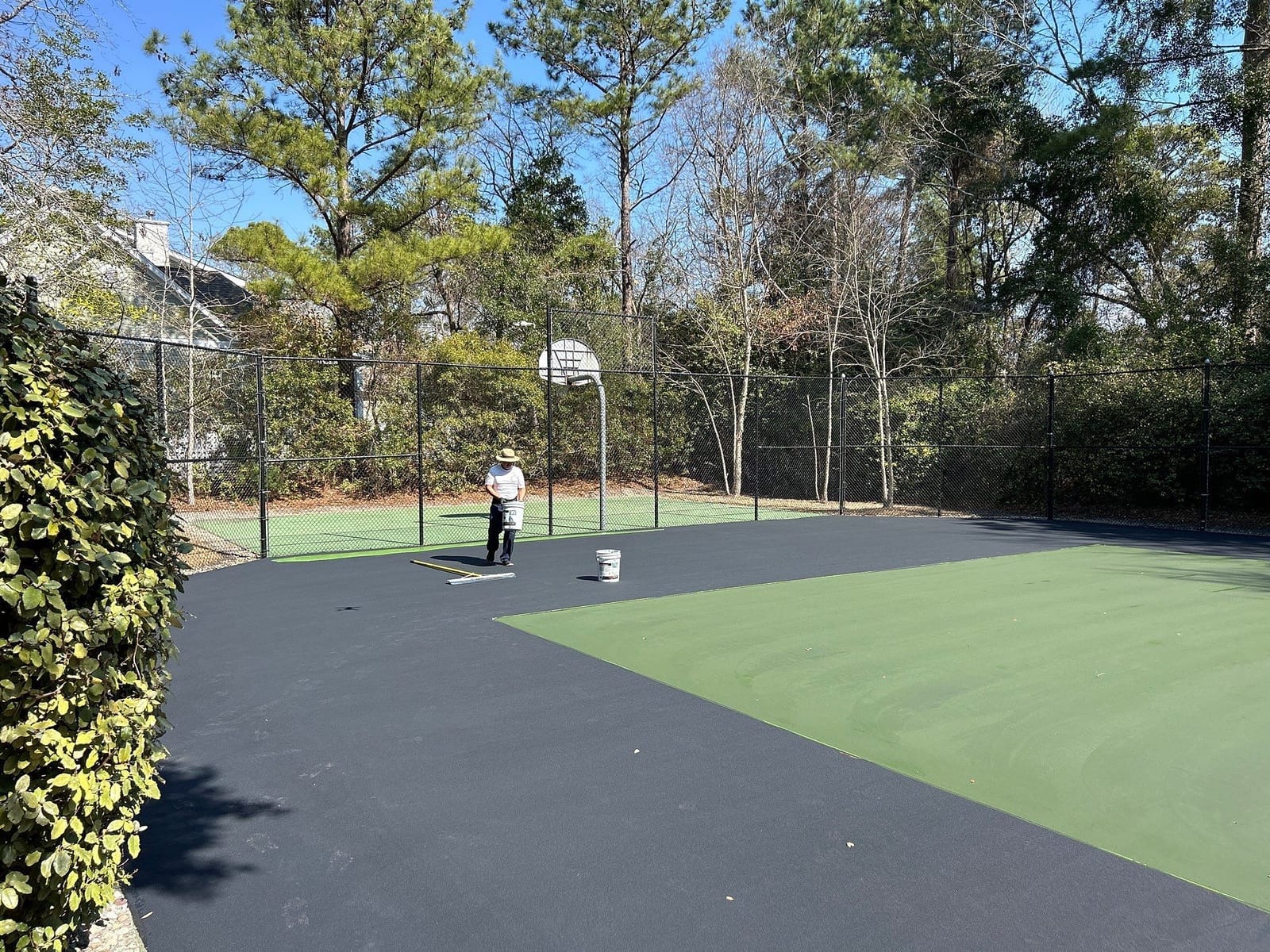
These are Waatti job-site photos, not stock. Crack filling and patching happen before any color goes on; the finished court only looks right because the repairs underneath were done properly.
See completed projects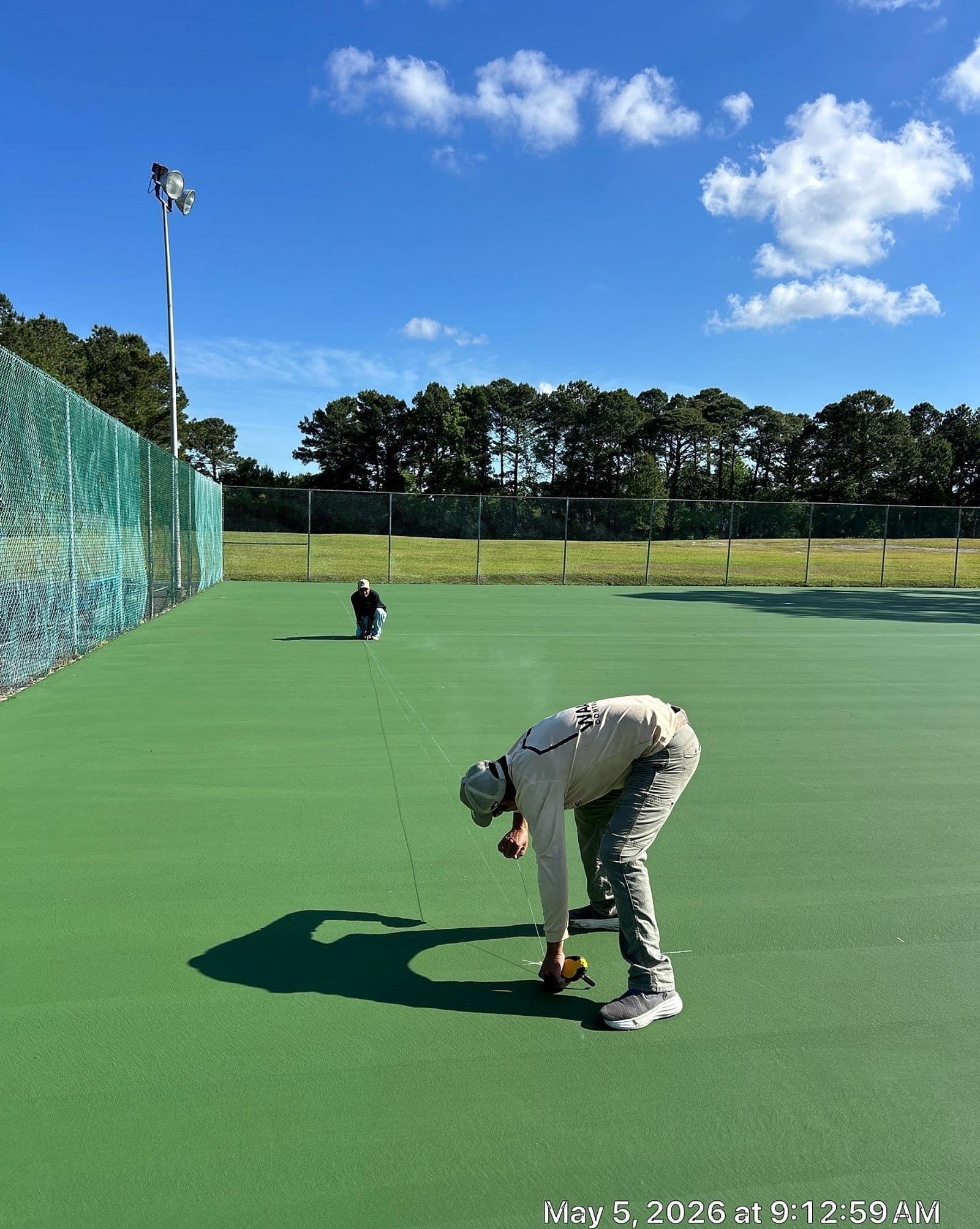
Repair
Base is sound; problems are local — some cracks, a few low spots, worn color or lines.
You are here →Resurface
The coating has failed broadly but the slab is stable. Repairs, resurfacer, two color coats, new lines.
Resurfacing process →Rebuild
Structural failure, severe settlement, or drainage that cannot be fixed on the surface.
New court construction →What affects cost: crack length and type, how much of the surface has failed, low spots to fill, line changes or conversions, hardware, and access. Dollar ranges are individual — use the instant estimate after entering your details, or request an evaluation for a firm, written proposal.
Where we repair courts
Our crews travel from Castle Hayne / Wilmington; we do not keep offices in these towns, and travel is never added to your estimate.
Court repair questions
How much does tennis or pickleball court repair cost?
It depends on what is wrong: a handful of cracks and a color refresh is very different from a court with delamination and drainage problems. The factors that move the number most are crack length and type, how much of the surface has failed, whether low spots need filling, line changes, and hardware. Our instant estimate on the contact page gives you a preliminary range once your contact details are saved; a firm number follows a site evaluation and written scope.
Can cracks in a court be fixed permanently?
Honestly, no — cracks are driven by movement in the asphalt or concrete beneath the coating, and movement does not stop. Good crack repair closes the crack, seals out water, and makes the surface safe and uniform. Membrane and fabric systems slow recurrence on wider cracks. We put in writing what the repair is expected to do.
Repair, resurface or rebuild — how do you decide?
Repair makes sense when the base is sound and problems are local (some cracks, a few low spots, worn color). Resurfacing is right when the coating has failed broadly but the slab is stable. Rebuilding is for courts with structural failure, severe settlement or drainage that cannot be corrected on the surface. We look at the court on site and give you that call plainly.
How long does court repair take?
Most repair-and-recoat projects take a few working days to about a week once we are on site, depending on scope and weather. Acrylic needs dry surfaces and suitable temperatures, so coastal weather can stretch the schedule; we build that into the timeline we give you.
Do you repair basketball courts too?
Yes. The same crack repair, patching, acrylic recoating and striping systems apply to basketball and multi-sport courts, plus goal and backboard replacement.
Which areas do you cover for court repair?
We travel from our Castle Hayne / Wilmington base throughout the Cape Fear region — Wilmington, Leland, Hampstead, Castle Hayne, Wrightsville and Carolina Beach, Southport and Oak Island, Surf City, and Jacksonville / Onslow County. We do not have offices in those towns; the drive is never added to your estimate.
How do I choose a court repair contractor?
Ask for a written scope that names the products and the number of coats, a workmanship warranty in writing, photos of comparable local work, and a clear statement of what the repair will and will not do. We provide all four on every proposal.
Start with an evaluation
Send a few photos and the court address. We will tell you whether repair, resurfacing or rebuilding makes sense — in writing.